


In our daily life, LED display screen are no longer limited to large rectangular structures in stage
In our daily life, LED display screen are no longer limited to large rectangular structures in stage backgrounds, shopping mall advertisements, stadiums and other places. In recent years, a technology that breaks through conventional forms is quietly emerging-LED special-shaped display screen. As the name suggests, it breaks the shackles of traditional rectangles and enters the public’s field of vision with more diverse and flexible appearance forms such as circles, triangles, spheres, and waves.
So, how is the LED special-shaped screen realized? How is it different form traditional LED display screen? Why are more and more architectural designs, exhibition spaces, and art installations starting to choose it? This article will take you to find out.
|
|


<!--[if !supportLists]-->1. <!--[endif]-->What is an LED special-shaped display screen?
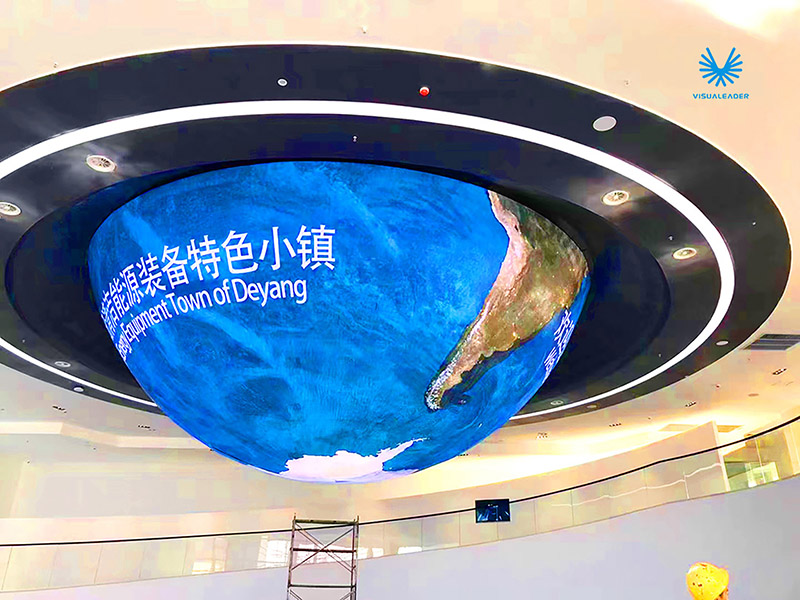
The LED special-shaped screen is essentially a display system composed of LED modules. But unlike the uniformly arranged rectangular modules, the special-shaped screen uses modules that can be cut, bent or customized, so that it can be spliced into irregular shapes, such as cylinders, cubes, arcs, and even arbitrary polygons.
The birth of this technology meets the needs of more and more scenes for “personalized vision”. especially in shopping mall atriums, technology exhibition halls, art spaces and even city landmarks, special-shaped screens have become a weapon to attract attention and create immersion.
|
|

<!--[if !supportLists]-->2. <!--[endif]-->what are the technical difficulties?
The “different” of special-shaped screen is not only reflected in the appearance, but also in the design, manufacturing and control system behind it. Compared with ordinary LED screens, special-shaped screens face several major technical challenges:
2.1 Module customization
Traditional modules have unified specifications, while special-shaped modules often require irregular cutting, and sometimes flexible PCBs. This means that accurate modeling and even 3D structural previews must be performed from the beginning of the design.
2.2 Complex splicing structure
Due to the ever-changing shapes, the supporting structure must vary according to the shape. This not only tests the mechanical design, but also requires the construction party to have extremely high assembly accuracy. A small error may cause the entire screen to be unable to be spliced flat.
2.3 Control system matching
Each unit of the special-shaped screen may be at different angles and positions, and the traditional video control system cannot be directly adapted. Usually a customized mapping algorithm is required to convert the standard image signal into the corresponding point output.
2.4 Heat disspation and stability design
Special-shaped structures often have more cramped internal space. How to effectively dissipate heat and prevent circuit overheating or signal interference is the premise of stable operation.
<!--[if !supportLists]-->3. <!--[endif]-->Why are special-shaped screen becoming more and more popular?
Stronger visual impact
Rectangular screens have a strong sense of visual fatigue due to their regular shapes. Special-shaped screens break boundaries and are easier to create visual focus, especially in commercial and cultural tourism scenes, which can amplify the expression of content.
|
|


Higher degree of spatial integration
Special-shaped screens can be laid along the curved surfaces, columns, ceilings or floors of buildings to achieve “integration” with the space, enhancing the sense of immersion and interaction.
Highlighting the combination of technology and art
Not only a screen, but also a kind of “installation art”. special-shaped LEDs provide unprecedented freedom for creative design, allowing technology and art to be naturally combined.
<!--[if !supportLists]-->4. <!--[endif]-->Main application scenarios of special-shaped display screens
4.1 Commercial display and signs
In shopping malls, brand flagship stores and exhibitions, special-shaped displays are used as billboards or information display screens. Their novel design helps to highlight the brand image and strengthen consumers’ brand memory.
4.2 Stage and performance
In modern stage design, special-shaped display screens are often used as background and decorative elements. Throngh multi-level and multi-angle combinations, the visual impact and artistic appeal of the performance are enhanced.
4.3 Interior decoration and architectural art
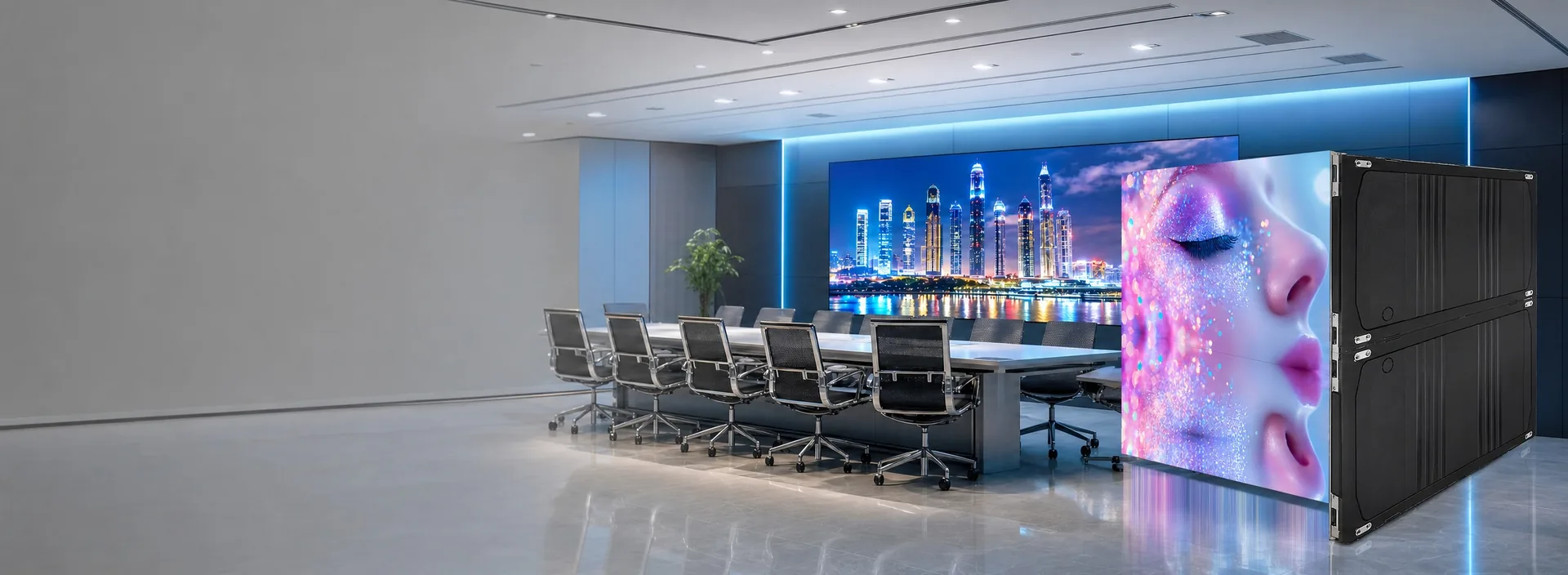
In many modern buildings and interior designs, special-shaped display screens are used as part of the decoration or functional design. For example, the dynamic wall created by the curved screen not only increases the sense of technology, but also enhances the beauty of the overall space.
4.4 Education and museums
Science and technology museums, museums and other educational venues use special-shaped display screens to create interactive exhibitions to help audiences understand complex information or storylines, and increase the fun and depth of learning.
In summary, the customization of special-shaped display screens is not only a reflection of technological progress, but also a symbol of the integration of cultural creativity and industrial design. It provides a visual expression method that breaks through tradition for various industries and is a window to show the charm of science and technology and art. We look forward to seeing more creative and functional special-shaped display screens appear in every corner of life in the near future.