


In the past decade, with the continuous breakthroughs in deep technologies such as optical display a
In the past decade, with the continuous breakthroughs in deep technologies such as optical display and graphic computing, the wave of digital development of teaching has become increasingly turbulent, and teaching methods are undergoing unprecedented changes. From the initial blackboard chalk, to the popularization of multimedia equipment, to the deep integration of cutting-edge technologies today, every technological innovation has brought new possibilities to education. Among them, virtual reality (VR) technology once became the focus of attention in the education community in the first decade. VR technology once set off a wave of teaching reform with its unique immersive experience, but with the deepening of application, it gradually revealed its limitations. At the same time, driven by holographic companies and other industry companies, holographic classrooms that focus on new display technologies have emerged with their own advantages and have become a new trend in 3D interactive teaching. The transformation behind this is not only a change in the form of technology, but also heralds the evolution of teaching methods and concepts.
|
|


1. The development of VR in teaching informatization: from glory to bottleneck
The development of virtual reality is full of exploration and breakthroughs. In the 1980s, VR technology was in its infancy and was mainly used in military, aerospace and other fields, such as aircraft simulation training, post-traumatic stress disorder treatment and other scenarios. With the improvement of computer technology and graphics processing capabilities, VR technology has gradually matured since 2010, and hardware equipment has become more popular and convenient, opening up a broad space for its application in the field of education. In educational practice, VR technology is widely used in virtual simulation laboratories, fusion innovation laboratories and other scenarios. Students wearing VR helmets can immerse themselves in the artistic conception of ancient poems in textbooks, explore the mysteries of the vast universe, or safely operate high-risk experiments, and present abstract and microscopic knowledge points intuitively in front of them. This immersive learning method has greatly stimulated students' interest in learning and sense of participation. Many studies have also shown that VR teaching can effectively improve students' participation, memory and comprehension, and provide students with safe and efficient practice opportunities.
However, with the large-scale application of VR technology in teaching in the past decade, many problems have gradually surfaced in terms of the depth and breadth of use. Although the cost of hardware equipment has dropped significantly with the improvement of VR technical solutions and processes, and there has also been a large-scale demand for individual users to purchase, the real limitation to the large-scale popularization of VR is still the perfect content development ecosystem. Unlike short video platforms, where everyone is a creator and has creative tools, they can continuously inject content resources into the platform. VR teaching courses developed based on 3D engines require not only professional programming knowledge, but also require developers to have an in-depth understanding of teaching content to ensure the authenticity and fun of the content, which makes many educational institutions discouraged. There are very few large domestic companies that specialize in large-scale development of complete VR content, but small and medium-sized enterprises have become the main source of customized VR content.
In terms of the integration of teaching modes, the combination of traditional teaching modes and VR technology is often difficult to be compatible, or there are inherent contradictions, and it is difficult for teachers to give full play to the immersive and interactive characteristics of VR technology. In the teaching process, teachers often simply let students wear VR equipment to experience it, without organically combining it with the teaching process, resulting in poor teaching results. In addition, teachers need to master the application methods of VR technology in order to give full play to its advantages in teaching. However, there are currently few people in the teaching team who master VR technology, which has also restricted the promotion of VR teaching to a certain extent. In addition, the problem of uneven distribution of educational resources is prominent. The penetration rate of VR equipment in urban areas is high, while it is difficult to carry out VR teaching in rural areas due to economic conditions. There are also differences between schools, which is not conducive to educational equity.
Looking at the supply platforms of various VR content, most of them are based on panoramic video + shallow interactive programs. Heavy 3D teaching programs that truly bring VR immersion and interactivity to the best effect are often rare. If you delve into the reasons, you will still return to the contradiction of difficult development, high cost and long return cycle of 3D simulation courseware.
|
|

2. Multi-dimensional comparison of holographic classroom and VR teaching
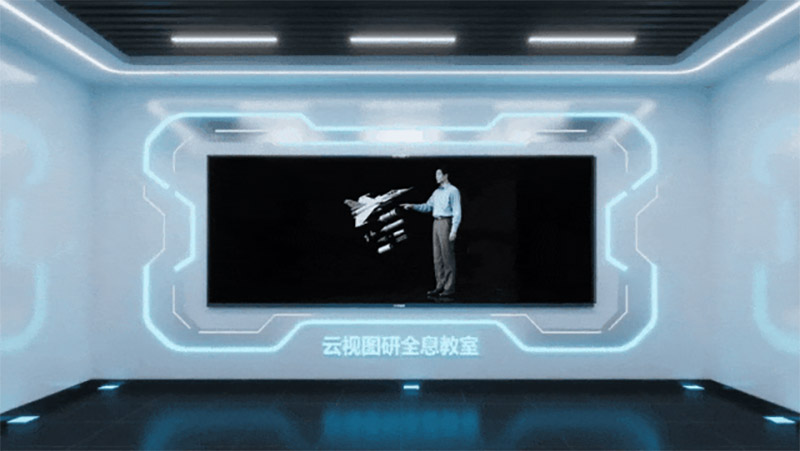
Holographic classroom, as a new species of teaching technology that has only appeared in the past two years, was first invented by Shenzhen technology companies and promoted into industrial applications. With its unique display effect, it has attracted great attention from the industry. Compared with VR teaching, holographic classrooms show obvious advantages in multiple dimensions. In terms of creating immersion, VR teaching isolates reality through head-mounted display devices, creating a completely virtual three-dimensional space, which can bring a unique immersive experience, but wearing it for a long time can easily make students feel uncomfortable, and the field of view and picture clarity are limited by the equipment. The holographic classroom uses virtual optical display technology to form a naked eye stereoscopic effect without special glasses, and realistically presents virtual graphics in the classroom space, creating a teaching environment that blends virtual and real. Its wide viewing angle and large size allow all students in the classroom to watch and learn at the same time, and the immersion is more natural, comfortable and lasting.
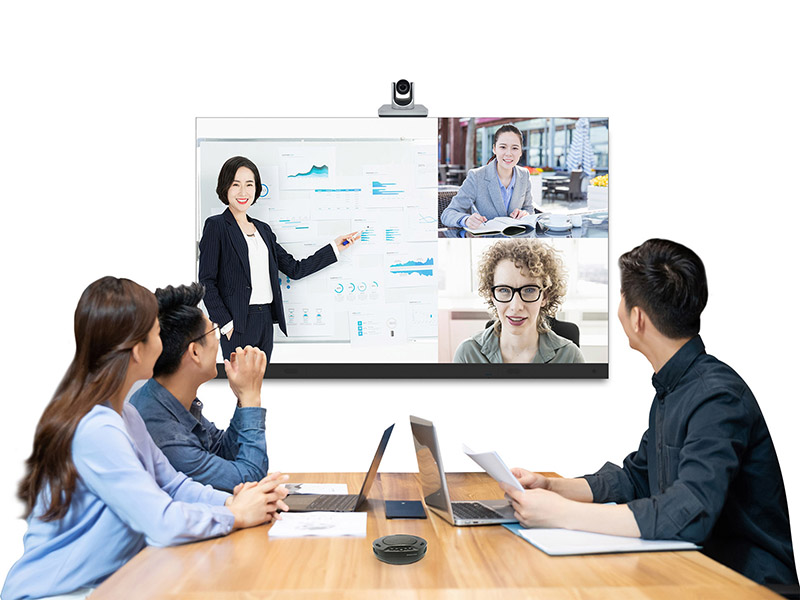
The immersive advantage of VR is unparalleled, but in terms of teaching, the importance of interactivity is obviously stronger than immersion. In terms of interactivity, although VR teaching can be operated in a virtual environment with the help of devices such as handles, it is inconvenient in classroom interaction and sharing, and it is difficult to achieve in-class discussion and instant interaction. The latest holographic classroom technology breaks this limitation. For example, the holographic classroom using the latest holographic technology can restore the holographic image of the remote teacher 1:1, and realize the real-time interaction and communication between the remote teacher and the local students within 200ms without physical sensation, just like "face to face" beyond time and space. Teachers can easily access holographic teaching resources, rotate, scale, decompose and synthesize the model, and students can also interact with teachers and virtual teaching content more intuitively and naturally, effectively improving the teaching effect.
Whether it is a complex geometric body, mechanical structure, or microscopic molecular model, like the VR system, the holographic classroom can display it clearly and intuitively, helping students reduce the difficulty of learning. Because it is free from the constraints of head-mounted devices, students can watch freely, and teachers and students can have regular classroom exchanges. In terms of difficulty of use, VR is more inclined to heavy 3D interactive applications. From the application in the past decade, except for virtual simulation laboratories and a few key disciplines, the degree of 3D interaction in most disciplines and majors is light. Holographic classrooms are also excellent in the display and interaction of single complex models, but the difficulty of creating and editing single models is greatly reduced, so holographic classrooms are more user-friendly.
In terms of teaching costs, VR teaching faces the dual high cost pressure of hardware equipment and content development. Although the initial construction of holographic classrooms also requires a certain amount of investment, in the long run, there is no need to equip each student with expensive head-mounted equipment. With the development of 3D forming technology and the maturity of 3D graphics editing technology, the development cost of holographic teaching content is gradually reduced. At the same time, it can also be compatible with conventional teaching courseware to reduce additional development costs. In terms of applicable scenarios, VR teaching is mostly used in specific scenarios. It has limitations in conventional teaching scenarios with multi-person collaboration and strong interactivity. Holographic classrooms have a wider range of applications. Whether it is special scenario teaching, remote interactive teaching, or daily course teaching, it can be easily mastered. For example, Shandong University has built a "one school, three locations holographic interactive classroom". Hong Kong University of Science and Technology, Tianjin University, Hunan Normal University, and Chongqing Normal University have also achieved cross-regional real-time interactive teaching.
|
|


3. The logic behind the holographic classroom becoming a new highlight of the smart classroom
The holographic classroom has become a new trend in 3D interactive teaching, which is the result of the combined effect of multiple factors such as technological development and changes in educational needs. At the technical level, the development of 5G communication technology provides strong support for holographic classrooms. Its high bandwidth and low latency characteristics solve the problems of stuttering and delay in holographic image transmission, allowing remote interactive teaching to achieve an "immersive" effect. The 5G holographic ideological and political open class conducted by South China Normal University, where students can clearly see the expressions and movements of holographic projection teachers and interact in real time, is a strong proof. At the same time, the progress of holographic projection technology itself has continuously improved the clarity and color reproduction of images, further optimizing teaching effects.
The change in educational needs is also driving the development of holographic classrooms. Modern education pays more and more attention to the personalized development of students and the cultivation of practical abilities, emphasizing students' active participation and interaction. Holographic classrooms just meet these needs. Their intuitive and vivid learning experience can stimulate students' interest and initiative in learning. Students can better understand and master knowledge and cultivate practical and innovative thinking by interacting with virtual teaching content. Moreover, the remote interactive function of the holographic classroom contributes to the widespread dissemination of high-quality educational resources and meets the desire of students in different regions for high-quality education.
In addition, the holographic classroom effectively solves many pain points of VR teaching. It reduces the cost of hardware and content development, improves the interactivity and flexibility of teaching, alleviates the problem of uneven distribution of educational resources to a certain extent, reduces safety and ethical risks, and provides new possibilities for improving the teaching evaluation system. At the same time, if the holographic teaching conversion software solution proposed by the industry can be realized, it will enable VR teaching content to be applied in the holographic classroom and promote the transition and integration of teaching technology.
The latest holographic technology is highly praised by many college teachers and industry experts. The holographic classroom is a new generation of digital teaching integrated solution that integrates cutting-edge technologies such as 5G communication, holographic optical imaging and artificial intelligence. It is applicable to a wide range of scenarios. Whether it is professional course teaching in colleges and universities or basic course teaching in primary and secondary schools, whether it is remote interactive teaching, 3D model teaching, or experimental simulation teaching, it can achieve innovative teaching. Displaying the structure of human organs in medical teaching and reproducing historical scenes in historical teaching make knowledge learning more vivid and intuitive. In terms of user experience, the product is easy to operate. Teachers can get started without complex training and easily access resources for teaching interaction. Students can enjoy the fun and easy learning experience brought by naked-eye 3D. The wide viewing angle and large size design ensure that every student has a good viewing effect.
As a new type of digital teaching achievement that emerged during the "14th Five-Year Plan", the holographic classroom has not only shown significant effects and advantages from the perspective of teaching technology innovation, but also has broad prospects in the future in terms of cross-regional educational resource sharing and fairness, and even in the field of China's foreign education and cultural exchanges, due to its own remote collaboration and educational inclusiveness. It is reported that some key universities have included holographic classrooms in the school's "15th Five-Year Plan" construction plan.