






Stage & Performance Rental LED Display Solution
Rental LED solution for stages and performances — curve-lock cabinets with fast rig, front...


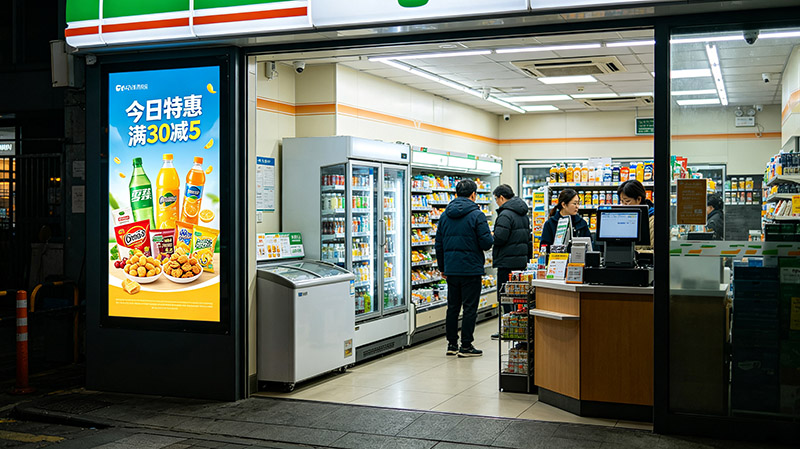
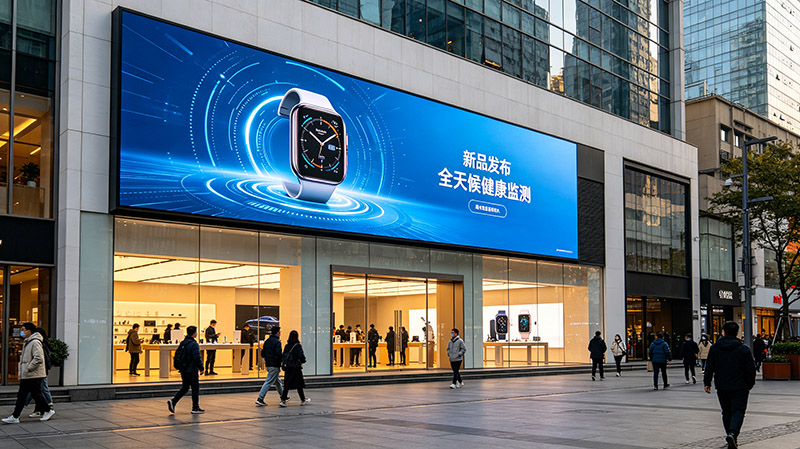
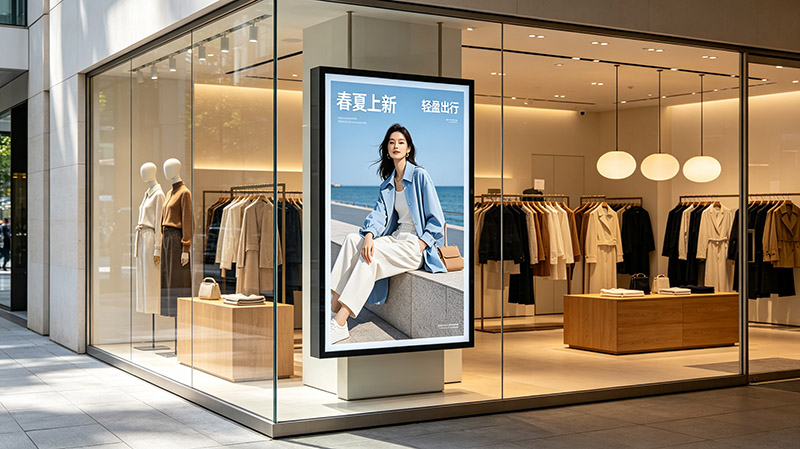
LED solution for retail stores and shops — bright, eye-catching storefront and in-store screens that
Retail digital-signage LED displays are modular digital-identity systems widely deployed in retail-commercial settings: street-facing storefront facades, glass shop windows, shopping-mall interiors, shelf zones and public mall spaces. The devices cyclically play brand promotional videos, new-product content, campaign materials, price information and navigation announcements. Compared with traditional printed posters and light-box advertisements, they support real-time remote content updates without repeated physical-material replacement, effectively attracting foot traffic and building store-brand image.
Retail-digital-signage scenarios fall into two major categories: outdoor street-side locations and indoor mall environments. Application forms include store-front signage, window displays, shelf-mounted units, hoisted screens, vertical poster displays and interactive special-shape installations. Solution selection requires comprehensive evaluation of viewing distance, ambient lighting, installation constraints, content-management requirements and later-stage maintenance conditions. Avoid over-specifying hardware parameters; balance visual performance, construction costs and long-term operational benefits.
Drawing on rich commercial-display project experience, Visualeader delivers customized solutions for retail stores and advertising venues. Every unit undergoes complete aging and full-inspection workflows before shipment. Compliance certifications such as CE, FCC, RoHS and UL are available upon request. We provide one-stop full-process services covering solution selection, configuration planning, construction design and after-sales maintenance.
|
|
Applicable scenarios: Store-front signage, building facades, street-side retail advertising. Environmental features: Exposure to sunlight, rain and wide temperature fluctuations; high requirements for protection, heat dissipation and lightning protection. Representative cabinet: M-series aluminum-alloy 960×960 mm cabinets with full-unit IP65 protection rating for all-weather outdoor operation.
Applicable scenarios: Store glass shop windows and glass curtain walls, balancing advertisement playback and indoor light transmission. Representative cabinet: G-series indoor fixed transparent screens with approximately 60 % light transmittance. Two standard cabinet sizes: 1000×1000 mm and 1000×500 mm; maximum brightness reaches 5000 cd/㎡.
Applicable scenarios: In-store image walls, product promotion, brand-video playback and information announcements. Advantages: Seamless splicing with flexible scalable dimensions. Fine-pitch variants are used for close-viewing scenarios. Front-service cabinets are available for locations lacking rear-side maintenance space to reduce maintenance difficulty.
Applicable scenarios: Corner storefronts in commercial districts and landmark retail-building facades. Note: Naked-eye-3D visual effects are achieved by combining special-shaped screens with custom perspective-adapted content. Stereoscopic output depends on screen geometry, viewing positions and content production; hardware alone cannot generate 3D visuals.
Applicable scenarios: Perimeter of commodity shelves; long narrow-form-factor displays. Functions: Show product prices, specifications and limited-time promotions. Integration with retail business systems enables one-click synchronized commodity-information updates, suited for compact shopping zones.
Applicable scenarios: Store entrances, shopping-mall aisles and temporary promotional events. Features: Ultra-thin all-in-one vertical units integrating screen, controller and enclosure. Easy disassembly and relocation. Key considerations include unit weight, power-supply configuration and handling convenience.
Applicable scenarios: Pillars, curved surfaces and special-shape store interior fit-outs. Notes: Confirm minimum bending radius, supporting frameworks and maintenance access before installation to guarantee flat visuals and serviceability for later-stage upkeep.
Applicable scenarios: Shopping-mall and exhibition-hall retail locations requiring customer-participation experiences. Functions: Integrated touch control, somatosensory detection, QR-code recognition and sensor-driven interaction. Interactive functions are optional add-ons requiring additional peripherals and software. Project implementation must address privacy-security requirements, accessibility and ongoing content maintenance.
|
|
1.Multi-Zone Remote Content Management Players paired with content-management-system software support multi-zone screen layout for simultaneous playback of videos, price lists and announcements. Scheduled playback and remote program push are supported. Functionality depends on hardware controllers and software licensing. Connectivity options include wired LAN, Wi-Fi and 4G/5G cellular networks.
2.Brightness and Contrast Brightness must match ambient-light conditions: lower brightness for indoor screens; high brightness for window and outdoor deployments. Color calibration ensures consistent picture color. Reference values: indoor 800-1500 cd/㎡; shop-window 2000-3000 cd/㎡; outdoor store-front ≥5000 cd/㎡ with automatic brightness-adjustment capability.
3.Intelligent Interaction Touch, somatosensory, AR and QR-code-driven engagement are optional features requiring extra sensors, processors and supporting software; they are not standard screen functionality.
4.Ultra-Wide Viewing Angle Wide horizontal and vertical viewing angles maintain stable picture sharpness and color consistency for customers viewing from different walking directions.
5.Pixel Pitch Smaller pixel pitches deliver sharper close-range visuals yet increase pixel count, equipment load and overall project cost. Select pixel pitch strictly according to actual viewing distances to avoid over-specified hardware.
6.Modular Customizable Dimensions Standard cabinets support free splicing for diverse aspect ratios. For custom projects, concurrently calculate structural load-bearing capacity, ventilation-heat dissipation, cabling and module-replacement service conditions.
7.Refresh Rate High refresh rates eliminate screen flicker and moiré artifacts in mobile-phone photos, ideal for customer check-in photography and social-media dissemination.
8.Protection and Maintenance Methods Outdoor units feature IP65 dust-and-waterproof performance together with lightning-protection and heat-dissipation measures. For compact indoor spaces, prioritize front-service cabinets with no requirement for rear-side maintenance access.
|
|
1.Boost In-Store Foot Traffic Store-front screens displaying new-product releases and promotional offers capture the attention of passers-by and drive customer inflow. Evaluate performance by comparing visitor-traffic datasets while excluding seasonal shifts and other concurrent-marketing interference factors.
2.Deliver Premium In-Store Visual Identity Dynamic video and rich color performance outperform static traditional posters. Set brightness appropriately to avoid glare-induced visual discomfort for shoppers.
3.Fast Real-Time Information Synchronization Instant updates for commodity prices, promotions and public notices. Chain-brand operators can push marketing materials to multiple retail outlets with a single command.
4.Improve Customer Interactive Experience Touch-screen queries and QR-code-based incentives raise customer engagement. Marketing effectiveness can be assessed by tracking QR-code scans, touch-interaction counts and visitor dwell duration.
5.Reduce Long-Term Material Expenses Digital content replaces paper posters and printed graphics, cutting printing and manual-replacement costs. Note: ongoing operational costs still include equipment power consumption, maintenance, spare-parts and content production.
1.Trigger Impulse Purchases Display limited-time discounts, bundled offers and new-product launches at shelf zones and checkout counters to precisely target customer decision-making moments. Compare pre- and post-deployment product-sales statistics to evaluate conversion performance.
2.Implement Scenario-Targeted Precision Marketing Deliver differentiated content according to time slots, store locations and customer demographics. Deploy A/B testing to identify high-conversion marketing assets.
3.Upgrade Brand Image Unified color calibration standardizes visual output across multi-store deployments and builds a modern retail-brand identity.
4.Calculate True Return on Investment
Return on Investment = (Total Additional Gross Profit + Saved Material Costs − Total Project Input) ÷ Total Project Input × 100 % Traffic volumes, product-sales figures and interaction metrics must be statistically compiled for objective benefit calculation, rather than relying on subjective impressions.
|
|
- Advertising & promotions: Playback of new-product announcements and limited-time offers - Information publication: Commodity pricing, menus and navigation announcements - Interactive experience: Touch-screen queries and somatosensory interaction (requires optional hardware & software) - Window display: Balanced advertising presentation and light transmission
- Indoor scenarios: Conventional SMD surface-mount large-format displays; COB screens for premium close-viewing locations; flexible modules for curved or special-shape fit-outs. - Outdoor scenarios: Thoroughly verify full-unit IP protection, heat dissipation and lightning-protection specifications, not merely module-level parameters. - Window scenarios: Adopt transparent LED screens if light transmission is required; conventional LED screens are preferred for pure advertising without transparency requirements for superior image quality and cost-efficiency.
Determine pixel pitch based on minimum viewing distance; set brightness matched to ambient lighting; align resolution with source-material specifications; confirm refresh-rate compliance for camera-photography use; verify bidirectional viewing-angle performance.
1.Vertical floor-standing: Store entrances and temporary promotions; movable configuration.
2.Wall-mounting: Space-saving; verify wall load-bearing capacity in advance.
3.Suspended hoisting: High-altitude mall installation requiring professional structural engineering.
4.Modular splicing: Freely combine to achieve arbitrary dimensions.
Validate controller and playback-software functionality: scheduled playback, multi-screen management and hierarchical permission controls. Support standard interfaces such as USB and HDMI. Network options include wired LAN, Wi-Fi and cellular mobile networks; enable local resume-playback upon network dropout.
Full-lifecycle project costs include hardware, structural auxiliary materials, installation-construction expenses, power consumption, content production and after-sales maintenance. Document warranty scope, spare-parts provision and after-sales-response timelines in written contracts.
Prioritize manufacturers supplying complete specification manuals, compliance certificates, construction drawings and project references, with clear spare-parts policies and after-sales support to avoid hidden charges.
1.AR/VR/XR Mixed-Reality Integration: Immersive experiences enabled by tracking hardware. Complete latency, viewing-angle and accessibility testing before real-world deployment.
2.High-End Retail Fine-Pitch and Micro-LED: Suited for premium close-viewing boutique stores. Prioritize practicality and maintainability instead of pursuing emerging concepts blindly.
3.AI-IoT Content Linkage: Automatic marketing-content switching triggered by time, inventory status and customer-behavior data. Mandate human review workflows and fallback content assets to prevent erroneous-content output.
4.Proliferation of Flexible Modular Displays: Adaptable to pillars and curved special-shape interiors, with stringent requirements for structural support, bending limits, heat dissipation and maintainability design.
5.Rational Adoption of Ultra-High-Definition Signal Chains: Retail deployments do not require unconditional 8K implementation. Match screen resolution, hardware performance and viewing-distance conditions to balance visual quality and cost.
|
|
1.What are suitable brightness parameters for retail digital-signage LED displays? For indoor retail-signage screens, brightness is recommended at 800-1500 cd/㎡; window-mounted screens 2000-3000 cd/㎡; outdoor store-front screens ≥5000 cd/㎡. Adjust values according to ambient lighting to balance clarity and viewing comfort.
2.Can retail digital-signage LED displays be remotely controlled via Android mobile phones? Yes. With the matching intelligent control system, Android smartphones, tablets and PCs can remotely publish content, set scheduled playback, monitor equipment status and adjust parameters.
3.Should retail outlets select transparent LED screens or conventional LED screens? Choose transparent LED screens for windows and glass curtain walls where light transmission and outward visibility must be preserved. For wall-mounted store-front applications dedicated purely to advertising without transparency needs, conventional LED screens deliver finer image quality and better cost-performance.
4.What protection configurations are required for outdoor retail LED screens? Outdoor screens must be equipped with IP65 dust-and-waterproofing, lightning-protection, corrosion-resistance and high-temperature heat-dissipation systems to withstand wind, rain, intense sunlight and dust for stable all-weather performance.
5.What content can retail digital-signage LED displays present? They support playback of brand promotional videos, product clips, campaign materials, price announcements, store navigation, holiday posters, real-time notifications and interactive games. Custom scheduled cyclic-playback modes are available.
A successful retail-digital-signage LED-display project centers on viewing-environment conditions, business objectives and long-term maintenance requirements. Properly configure pixel pitch, brightness, protection grade, installation structures and control systems to strike a balance between visual performance and project cost.
For customized configuration and quotations, please provide: installation scenario, estimated screen dimensions, viewing distance, indoor/outdoor environment and project go-live timeline. We will deliver a dedicated project solution accordingly.
|
|
1.Full-Category Product Portfolio for Diverse Retail Formats
Visualeader’s complete product lineup covers outdoor store-front signage screens, transparent window screens, indoor fine-pitch displays, shelf-edge screens, poster all-in-one units, flexible special-shaped screens and naked-eye-3D displays. Solutions serve street-side shops, chain brands, high-end counters and shopping-mall venues. Standard-size products are available for fast delivery from stock, while custom-build options support special-shape projects.
2.Rigorous Quality Control and Comprehensive Compliance Certifications
All finished units undergo module testing, cabinet assembly, full-unit aging and final factory inspection before shipment to reduce on-site failure risks. International and domestic test reports including CE, FCC, RoHS and UL can be provided on request, with complete compliance documentation for chain-store and export projects.
3.Robust Environmental Adaptability for Indoor and Outdoor Deployment
Outdoor models deliver IP65 full-unit protection, paired with lightning-protection and heat-dissipation systems to withstand intense sunlight, rainfall and dust. GOB-protected options are available for indoor units for enhanced collision-resistance and moisture resistance. Front-service cabinets are widely adopted for retail digital-signage deployments. Single modules can be replaced from the front side for high-mounted store-front installations or mall counters with no rear-side service access, cutting maintenance costs and minimizing screen-downtime for retail outlets. High refresh rates across the product range produce moiré-free photos captured by customers’ mobile phones and facilitate social-media sharing.
4.Flexible Content Management for Single-Store and Chain-Brand Operations
The system supports local USB playback for simple operation in small independent stores. For chain brands, cloud-platform cluster management enables headquarters to push marketing materials with one-click commands, while allowing local stores to customize content locally. Features include zoned playback, scheduled power-on/off and ambient-light-sensor automatic brightness adjustment. Network-disconnect resume playback ensures advertisements keep running even during network outages. Integration with retail business systems supports one-click synchronized updates for product prices and promotional information.
5.Versatile Installation Formats for New-Store and Retrofit Projects
Multiple installation modes are supported: wall-mounting, recessed embedding, hoisting and floor-standing brackets. Transparent screens fit glass shop windows, and flexible displays adapt to curved pillar surfaces. For store-renovation projects, designs fully leverage existing wall and glass structures to lower renovation costs.
6.One-Stop End-to-End Project Delivery Services
Full-range services include site surveys, solution selection, structural drawings, production & supply, installation guidance, color calibration and operator training. Project-risk alerts are provided in advance covering outdoor-advertising approval requirements, wall load-bearing capacity and lightning-protection specifications. Itemized transparent quotations clearly separate hardware, structural components, installation and cloud-platform service costs. Synchronized multi-store delivery is available for national-chain projects, alongside spare-parts supply, periodic inspections and technical support to guarantee long-term stable screen performance.
Rental LED solution for stages and performances — curve-lock cabinets with fast rig, front...

Rental LED solution for large outdoor events and festivals — weather-ready, fast-lock cabi...

Rental LED solution for exhibitions and trade shows — fast-rig, seamless booth screens tha...
Send the pitch, size and site conditions — you’ll get a spec and a price, not a brochure.

