







Stage & Performance Rental LED Display Solution
Rental LED solution for stages and performances — curve-lock cabinets with fast rig, front...

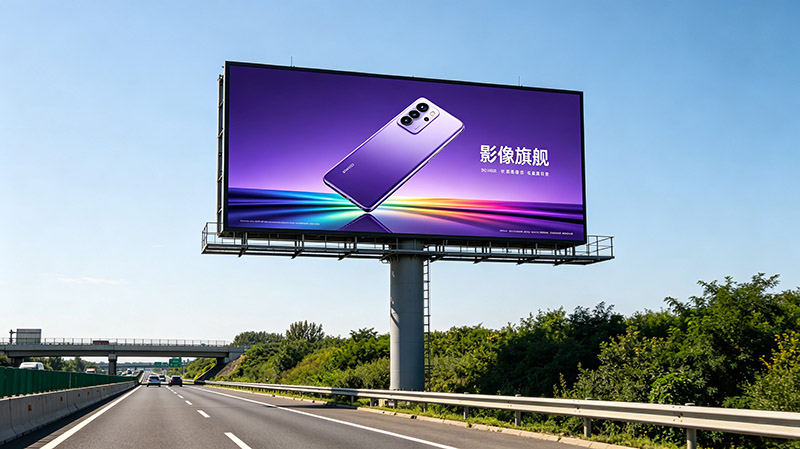
Complete Solution for Outdoor Billboard LED Displays<span class="15" style="mso-spacerun:'
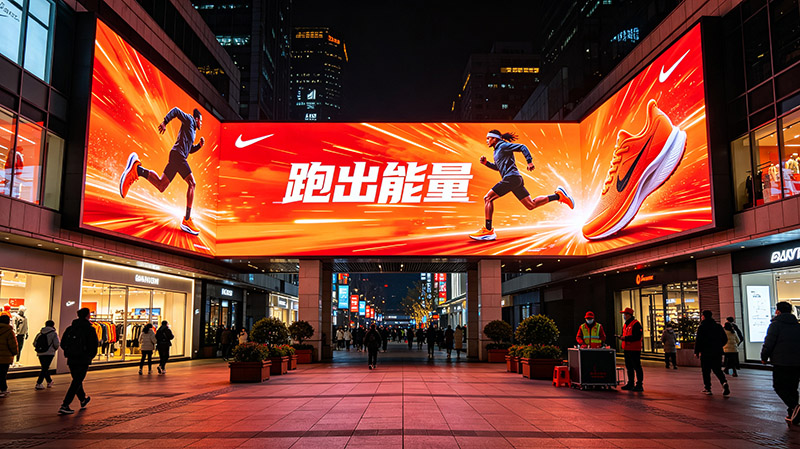
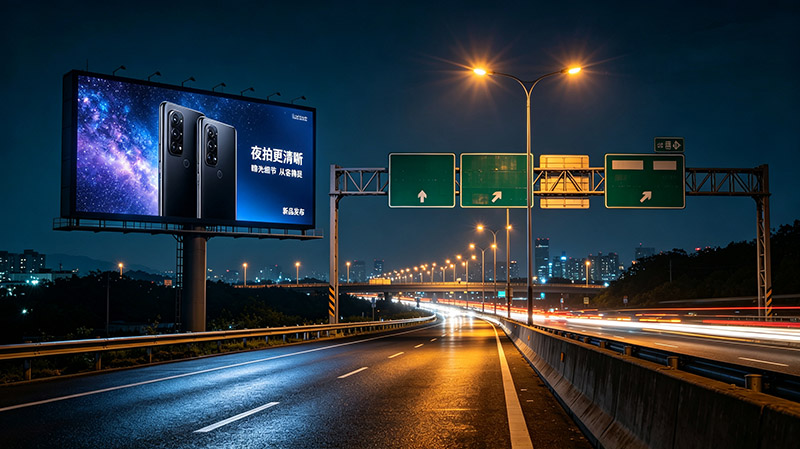
Outdoor billboard LED displays constitute key digital carriers for urban commercial communication. They are widely deployed along urban arterial roads, on commercial-district facades, rooftops, pillars, traffic intersections, park plazas and cultural-tourism scenic spots. Replacing traditional printed and light-box billboards, they cyclically broadcast commercial advertisements, public-welfare announcements, cultural-tourism clips, emergency alerts and creative naked-eye-3D videos. Content can be updated remotely in real-time without physical-material replacement, greatly improving advertising exposure value.
Outdoor billboards operate under harsh conditions including intense sunlight, heavy rainfall, dust, large diurnal temperature differences, coastal salt-fog corrosion and strong winds. Projects should not be evaluated based solely on display-panel hardware. Integrated design must cover display parameters, full-unit protection, common-cathode energy-saving technology, steel-structure wind-resistance, power-distribution lightning-protection, advertising-approval compliance and maintenance schemes.
Visualeader delivers complete end-to-end outdoor LED billboard solutions, covering hardware selection, structural design, power-distribution & lightning-protection, playback-control systems, site-survey-commissioning and after-sales maintenance. Our product portfolio adapts to wall-mounted, rooftop, single-/double-pillar, corner-curved and naked-eye-3D billboard configurations. Equipped with common-cathode energy-saving drive technology, our displays effectively reduce overall power consumption and long-term electricity expenditure while preserving brightness and image quality.
|
|
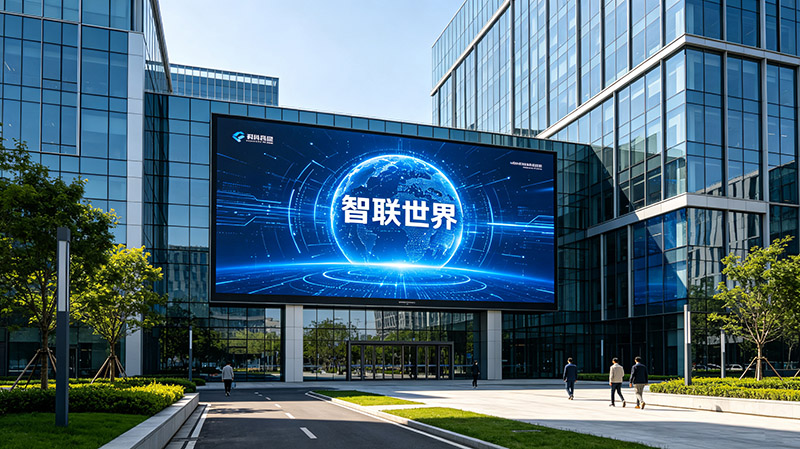
Installed on outer walls of office buildings and commercial complexes, this is the most prevalent format in urban business districts. Suited for high-foot-traffic and heavy-vehicle-flow zones, supports flat, right-angle-corner and curved naked-eye-3D large-screen builds. Wall load-bearing capacity, wind-load calculations and maintenance-access pathways require rigorous verification.
Mounted on building rooftops for long-distance coverage of urban arterial roads with extended viewing distances. High requirements apply for steel-structure wind-resistance, lightning-protection and overall heat dissipation. Construction must comply with rooftop load-bearing, fire-safety and urban-appearance regulatory requirements.
Freestanding steel-structure pillars positioned alongside roadways or in open plazas without building-wall support. Reinforced-concrete civil foundations are required. Emphasis is placed on foundation bearing-capacity, overturn-resistance and wind-resistance rating calculations.
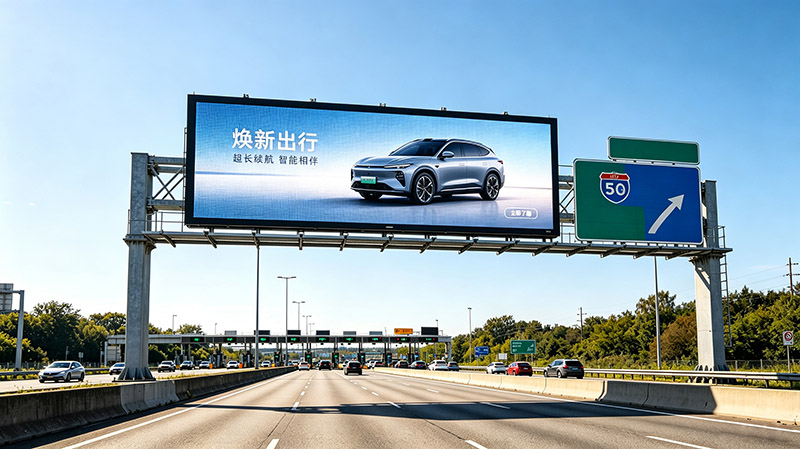
Deployed at highway entrances-exits, high-speed-rail stations and urban plazas for mixed commercial-advertising and public-announcement output. Designed for heavy pedestrian volumes and wide viewing-distance ranges, requiring wide viewing angles and reliable all-weather performance.
Installed at scenic-spot entrances and tourist hubs to broadcast cultural-tourism promotions, venue navigation and commercial advertisements. Some projects require custom curved or special-shaped styling integrated into landscape design.
Application Scenario | Typical Viewing Distance | Recommended Pixel Pitch | Remarks |
Street-facing commercial-district facades (close-range: 6-20 m) | 6-20 m | P4-P6 | Urban business-district deployments; balances clarity and cost-efficiency; supports naked-eye-3D content playback |
Rooftop & pillar long-distance advertising | 15-40 m | P6-P10 | Optimized for long-distance viewing; controls overall project costs |
Traffic intersections & highway access points | 20-50 m | P8-P10 | Prioritizes legibility of text and video footage for far-field audiences |
Selection Principle: Avoid blind pursuit of ultra-fine pixel pitches. Conduct comprehensive evaluation based on minimum viewing distance, screen dimensions and project budget.
1.Brightness: Full-unit brightness ≥5000-6000 cd/㎡ for open-air outdoor environments. Standard ambient-light-sensor-dimming capability delivers high brightness by day and automatic brightness reduction at night to satisfy urban light-pollution regulations; night-time brightness drops to within 300-500 cd/㎡.
2.Refresh Rate: ≥3840 Hz for moiré-free capture by mobile phones and cameras, ideal for public check-in photography and short-video sharing.
3.Common-Cathode Energy-Saving Drive Technology: Adopts common-cathode circuit architecture with independent voltage-division driving for red, green and blue LED chips, differing from conventional common-anode drivers. Under identical brightness and visual-quality conditions, overall power consumption decreases, with pronounced energy-saving gains when playing high-brightness advertising footage. Operating temperatures of LED chips are lowered to mitigate light decay and extend total display service life.
4.Protection Rating: Full-unit IP65 protection covering both front and rear cabinet surfaces (not limited to module-level protection). Salt-fog-resistant three-proof conformal coating is added for coastal sites. Cabinets incorporate breathing valves to prevent circuit-board corrosion from condensation induced by diurnal temperature swings.
5.Viewing Angle: Horizontal ≥140°, vertical ≥120°, delivering consistent color reproduction for passing vehicles and pedestrians across multiple perspectives.
6.Maintenance Mode: Prioritize front-service cabinets, enabling module and power-supply replacement from the front for high-altitude and rooftop locations lacking rear-side maintenance access. Dual-front-and-rear-service configurations are optional where conditions permit.
7.Operating-Temperature Range: -20 ℃ ~ +55 ℃, suited for four-season conditions across most domestic regions. Low-temperature heating modules are added for severely cold climates, and enhanced heat-dissipation air channels for high-temperature zones. Common-cathode architecture lowers module heat generation and eases overall thermal-management burdens.
The full outdoor-billboard system comprises five subsystems:
1.LED Display Cabinets: Outdoor-grade die-cast-aluminum / galvanized cabinets fitted with common-cathode energy-saving LED modules, power supplies and receiving cards.
2.Video-Processing & Control System: Sending cards, receiving cards, video processors and playback boxes; supports 4K input-output and multi-window zoned playback.
3.Content Playback-Control Platform: Local playback, 4G/5G / cloud-based remote management; supports scheduled playback, fault alarms and multi-screen cluster management; offline resume-playback upon network loss.
4.Intelligent Power-Distribution Cabinet: Over-voltage, over-current, short-circuit and phase-loss protection with staged delayed power-on; integrated lightning-protection modules mitigate equipment damage caused by power-grid surges.
5.Steel-Structure & Auxiliaries: National-standard galvanized steel structures, civil-engineering foundations, earthing-lightning-protection systems, cabling, decorative trim and heat-dissipation-ventilation assemblies.
|
|
1.Wall-Mounted Type Steel-structure hangers are fastened to load-bearing solid walls. Wall-load-bearing capacity must be verified beforehand. Front-service cabinets eliminate requirements for large rear-side maintenance spaces. Well-suited for commercial-building facades.
2.Rooftop Elevated Type Steel-structure supports are erected on building rooftops. Rooftop load-bearing and wind-resistance must be re-verified alongside rooftop waterproof-protection measures. Lightning-protection and earthing systems are mandatory.
3.Freestanding-Pillar Type (Single / Double-Pillar) Reinforced-concrete civil-engineering foundations with pillar steelwork. Overturn-resistance and wind-resistance calculations are compulsory. Applied for open-air plazas and roadside locations.
4.Recessed-Embedded Type Screens sit flush within pre-reserved building-facade openings for a clean aesthetic. Heat-dissipation and drainage pathways must be reserved; front-service cabinets are required.
Important Construction Reminder: For all outdoor-billboard projects, outdoor-advertising installation approvals must be obtained in advance from urban-management, housing-construction and planning authorities. Confirm specifications for dimensions, brightness and playback regulations to prevent non-commissioning upon completion. Separate strong-current and weak-current cabling; all metallic structures require reliable earthing and lightning-protection.
1.Supports playback of images, short videos, promotional clips and dynamic posters. Multi-zone split-screen capability enables simultaneous commercial-advertising playback alongside public-welfare notifications, time-of-day and weather information.
2.Scheduled tasks: automatic power-on/off and program switching for workdays and holidays; paired with ambient-light-sensor automatic brightness adjustment.
3.Local USB playback permits normal operation without network connectivity.
1.Remote advertising-material distribution via PC, tablet or mobile phone; no on-site file-copying required.
2.Unified cluster-management for multiple billboards, alongside independent per-screen configuration.
3.Online equipment-status monitoring with automatic alarms for abnormal temperature, voltage and module faults. Playback logs are retained for traceable advertising-delivery durations, providing delivery-proof documentation for advertising clients.
4.Offline resume-playback: screens continue playing cached content during network outages without black-outs.
1.Playback of distorted perspective naked-eye-3D videos to create social-media-worthy landmark billboards (custom 3D source materials are required).
2.Integration with meteorological and emergency-response platforms for disaster-alert and urban public-welfare announcement distribution.
Total investment for an outdoor LED billboard exceeds per-square-meter panel pricing. Full-project cost breakdown:
1.LED Display Hardware: Common-cathode energy-saving modules, cabinets, power supplies and receiving cards.
2.Control System: Video processors, sending-receiving cards, playback boxes and cloud-platform licensing.
3.Civil-Engineering & Structural Works: Steel structures, civil-foundations, earthing-lightning-protection and decorative trim.
4.Electrical System: Power-distribution cabinets, power cables and heat-dissipation assemblies.
5.Implementation Expenses: Transportation, high-altitude hoisting-operations, installation-commissioning and full-unit color calibration.
6.Miscellaneous: Spare-parts inventory, warranty services and operator training.
7.Extra Expenditures: Outdoor-advertising approval and inspection-assessment fees (subject to local regulations).
Quotation Advice: Request itemized detailed quotations from suppliers; avoid unit-price-only quotes for bare panels. Although common-cathode hardware carries moderately higher procurement costs, it delivers substantial long-term electricity-saving benefits for 7×24-hour non-stop outdoor-advertising deployments.
|
|
Comparison Item | Outdoor Full-Color LED Billboard (Common-Cathode Energy-Saving) | Traditional Printed Billboard | Light-Box Billboard |
Content Update | One-click remote update for video and animation; low cost & fast turnaround | Re-printing required; high labor cost for mounting-dismounting | Light-sheet replacement with long lead-times |
Visual Performance | Dynamic video with vivid colors, strong visual impact; supports naked-eye-3D effects | Static visuals only, no dynamic output | Static light-sheet content with limited expressive power |
Night-Time Performance | Adjustable brightness for balanced day-and-night visuals; common-cathode cuts night-time power draw | Requires supplementary external spotlights for night illumination | Internal fluorescent-tube lighting |
Maintenance & Repair | Modular architecture supporting individual-module replacement | Complete-picture replacement required | Whole-bank lamp replacement |
Advertising Operation | Traceable playback logs suited for digital-media commercial workflows | No digital delivery-duration statistics available | No digital delivery-duration statistics available |
Energy-Consumption Performance | Common-cathode drive delivers lower power draw and heat generation at equivalent brightness | Continuous power consumption by external spotlights | Continuous power consumption by internal tubes |
1.On-Site Survey: Take field measurements for dimensions, viewing distances, wall-foundation load-bearing capacity, solar-exposure orientation and power-supply points. Gather local advertising-approval requirements and confirm wind-load ratings.
2.Solution Refinement: Finalize pixel pitch, screen dimensions and cabinet model; select common-cathode or conventional drive schemes. Generate steel-structure, power-distribution and earthing-lightning-protection drawings.
3.Pre-Implementation Approval: Assist clients with document preparation for outdoor-advertising-facility permit applications.
4.Production & Stock Preparation: Manufacture display panels, power-distribution cabinets and steel-structure components; conduct full-unit aging testing before shipment.
5.On-Site Construction: Civil-engineering / steel-structure erection, earthing-lightning-protection installation, strong-/weak-current cabling and screen assembly-mounting.
6.System Commissioning & Color Calibration: Full-screen brightness-color calibration; configure scheduled tasks, remote-management functions and alarm triggers.
7.Project Acceptance: Comprehensive testing of functions, image output and protective features. Deliver operator training, drawings, manuals and spare-parts inventories.
8.After-Sales Operation & Maintenance: Warranty-period services, periodic inspections and ongoing technical support.
|
|
1.Prioritize full-unit protection rather than only module-level IP ratings. For outdoor deployments, verify cabinet sealing, breathing-valve performance and interface waterproofing. Salt-fog-resistant three-proof coating is mandatory for coastal projects.
2.Do not cut budgets for steel-structure and civil-foundation works. Wind-resistance and overturn-resistance for rooftop and pillar-mounted installations directly determine safety and must follow formal engineering specifications.
3.Brightness and light-pollution governance: Ambient-light-sensor automatic-dimming must be deployed to comply with local night-brightness restrictions and avoid light-pollution complaints. Common-cathode hardware preserves color consistency even under low night-time brightness.
4.Maintenance-access planning: Define repair methodologies for high-altitude billboards at the design phase. Prioritize front-service cabinets to reduce future high-altitude-maintenance expenses.
5.Secure approvals prior to construction. Never commence construction without valid outdoor-advertising permits to prevent demolition-related losses.
6.Reserve spare-parts stocks. Maintain inventories of modules and power supplies for fast fault-part replacement and minimize advertising-downtime losses.
7.Rational energy-saving-scheme selection: Common-cathode energy-saving configurations are recommended for rooftop and pillar-mounted billboards running 7×24-hour continuous operations. For screens with shorter daily operating hours, evaluate budgets before final selection.
1.Improve Commercial Advertising Returns: Dynamic advertising delivers stronger audience attraction and expands potential advertiser bases. Traceable playback logs enhance media-company competitiveness. Common-cathode energy-saving technology lowers long-term electricity bills and directly boosts net project profits.
2.Dual Commercial-Public-Welfare Capabilities: A single screen enables revenue-generating advertising alongside urban public-welfare messaging and emergency-alert broadcasting.
3.Reduce Long-Term Material-Operating Costs: Eliminates recurring expenses for printed-picture production and physical-mounting labor.
4.Create Urban Landmarks: Business-district deployments can implement naked-eye-3D large-screens to build social-media-famous check-in landmarks and generate secondary online-social-media exposure.
5.Predictable Full-Lifecycle Performance: Modular design permits component-level replacement for local faults instead of full-screen renewal. Common-cathode drive lowers module operating temperatures, slows LED light decay and extends overall equipment lifespan.
|
|
Q1: What brightness level is generally required for outdoor LED billboards?
For open-air unobstructed locations, ≥5000-6000 cd/㎡ brightness is required. Ambient-light sensors are mandatory for automatic night-time brightness reduction to comply with light-pollution regulations. Common-cathode technology achieves lower power consumption under equivalent-brightness conditions.
Q2: Should outdoor screens adopt front-service or rear-service architecture?
For rooftop and wall-mounted outdoor billboards without rear-side clearance, front-service cabinets are preferred. Rear-service cabinets are acceptable for installations with dedicated independent maintenance rooms.
Q3: What is the energy-saving principle of common-cathode LED displays?
Common-cathode architecture supplies power independently to RGB LED chips. Compared with traditional common-anode drivers, each color channel operates at its optimal voltage to cut ineffective power draw. Simultaneously, module operating temperatures drop and light decay slows, delivering dual benefits of energy savings and longer service life. Energy-saving benefits become more pronounced for high-brightness advertising footage.
Q4: How do outdoor LED screens cope with thunder-storm weather?
Specialized lightning-protected power-distribution cabinets and reliable steel-structure earthing are deployed. Cabinets are fully sealed and waterproof. The system supports automatic power-off protection during thunder-storm events.
Q5: Can naked-eye-3D advertising content be played directly?
The hardware supports 3D-video playback. However stereoscopic visual effects depend on screen geometry, viewing-point positioning and custom-produced 3D source materials. Hardware alone cannot generate native 3D visuals.
Q6: What is the approximate service life of outdoor-billboard LED screens?
Standard-grade products deliver 80 000-100 000 hours of service life under proper operating conditions. Common-cathode configurations run cooler with slower light-decay rates. Actual service life is determined by heat-dissipation performance, protection quality, local climate and maintenance standards.
A qualified outdoor-billboard LED-display project is more than simple hardware procurement. It requires coordinated matching of display parameters, full-unit protection, common-cathode energy-saving hardware, steel-structure wind-&-lightning-protection, power-distribution systems, regulatory-approval compliance and maintenance schemes. Select pixel pitches rationally according to viewing-distance conditions. Evaluate common-cathode energy-saving solutions for 7×24-hour non-stop advertising deployments to balance upfront capital expenditure against long-term electricity costs. Attach high importance to safety-protection specifications and draw-up well-considered full-lifecycle budgets.
For customized solutions and quotations, please provide: installation location, installation mode (wall-mount / rooftop / pillar-mount), available screen dimensions, viewing distance, local environmental conditions and estimated daily operating hours. We will deliver tailored configuration lists and quotations accordingly.
Visualeader specializes in commercial-grade large-format outdoor LED advertising screens. For business districts, rooftop installations, pillar-mounted setups, cultural-tourism scenic spots and other scenarios, we deliver integrated solutions covering hardware, structures, playback-control systems and after-sales support. Flat, corner-curved and naked-eye-3D billboards can be realized for media operators, commercial real-estate enterprises and cultural-tourism government entities.
1.Common-Cathode Energy-Saving Solution for Cost Reduction & Extended Service Life
M-series, MA-series, ME-series, AF-series and AT-series cabinets are available with optional common-cathode energy-saving modules featuring independent voltage division for RGB channels. Power consumption is lowered at equivalent brightness levels, cutting electricity expenses under 7×24-hour operation. Module operating temperature is reduced to slow LED light decay, extend overall equipment service life and improve long-term operational returns.
2.Full-Unit IP65 Protection for All-Weather Stable Operation
Cabinets achieve full-unit IP65 protection rating and are fitted with breathing valves to prevent internal condensation. PCBs receive three-proof conformal coating; salt-fog-resistant configurations are optional for coastal locations to withstand heavy rain, dust and drastic temperature swings. Lightning protection and earthing are implemented. The equipment operates across a wide temperature range of -20 ℃ ~ +55 ℃, with enhanced heat dissipation for high-temperature environments and optional heating modules for frigid conditions. Full-unit aging tests are performed prior to shipment to minimize on-site failures.
3.High Brightness & High Refresh Rate Optimized for Short-Video Dissemination
Maximum brightness reaches 6000 cd/㎡ paired with ambient-light-sensor automatic dimming, balancing daytime visibility and night-time light-pollution control. A refresh rate ≥3840 Hz eliminates moiré patterns in camera footage. The 140° wide viewing angle ensures consistent color reproduction for vehicular and pedestrian audiences from multiple perspectives. Playback of conventional advertisements and distorted naked-eye-3D source materials is supported for landmark urban large-screen installations.
4.Modular Structures Adaptable to New Installations & Retrofit Projects
Standard die-cast-aluminum cabinets support flat, corner and curved splicing. Installation options include wall-mounting, rooftop mounting, pillar mounting and recessed embedding. Front-service architecture enables module and power-supply replacement from the front side for high-altitude deployments without full-screen disassembly. This reduces high-altitude working risk and revenue losses caused by advertising downtime, and suits both new-build and retrofit projects.
5.Intelligent Playback-Control Optimized for Commercial Media Operations
Simple local USB playback is supported, alongside cloud-platform cluster management for remote material distribution via mobile phones or PCs. Functions include zoned playback, scheduled power-on/off, offline resume-playback upon network dropout and equipment-fault alarms. Advertising playback logs are traceable. Integration with meteorological and emergency platforms enables public-welfare early-warning announcements.
6.Strong Project Delivery Capability with Compliant & Itemized Quotations
Reference drawings for steel structures, load-bearing calculations and lightning-protection designs can be supplied. Risk reminders are provided in advance covering advertising-approval formalities, load-bearing capacity and wind-resistance requirements. Transparent itemized quotations cover display panels, common-cathode modules, control systems, steel structures, power distribution, installation, spare-parts and warranty services. Full-set certifications including CE, FCC, RoHS and UL are available for bidding and export projects.
7.One-Stop Full-Lifecycle Services
Modules, power supplies and receiving cards support individual replacement to cut maintenance expenses. End-to-end workflows cover site surveys, solution design, drawing production, supply delivery, installation-commissioning, color calibration and operator training, together with periodic inspections and spare-parts provision. Clear terms are defined for warranty coverage, spare-parts lead-time and after-sales response times to guarantee long-term stable commercial-grade screen operation.
Rental LED solution for stages and performances — curve-lock cabinets with fast rig, front...

Rental LED solution for large outdoor events and festivals — weather-ready, fast-lock cabi...

Rental LED solution for exhibitions and trade shows — fast-rig, seamless booth screens tha...
Send the pitch, size and site conditions — you’ll get a spec and a price, not a brochure.

